Have you ever stared at a blinking cursor on a registration page, trying to distill your entire competitive identity into a single phrase? You are not alone. Millions of players globally face this exact roadblock when trying to build a lasting presence in the digital arena.
People search for the ultimate name team esport formulas because they realize a simple truth. In modern gaming, your moniker is your flag, your brand, and your psychological armor all rolled into one. It is the first thing an opponent sees loading into a lobby and the last thing an audience remembers when the trophy drops.
The confusion usually stems from balancing edge with professionalism. A name that sounds cool in a private Discord server might look entirely ridiculous on a main-stage broadcast jersey. This guide untangles that exact web, helping you move from a generic tag to a legendary banner.
Name Team Esport – Quick Meaning
Defining the Competitive Moniker
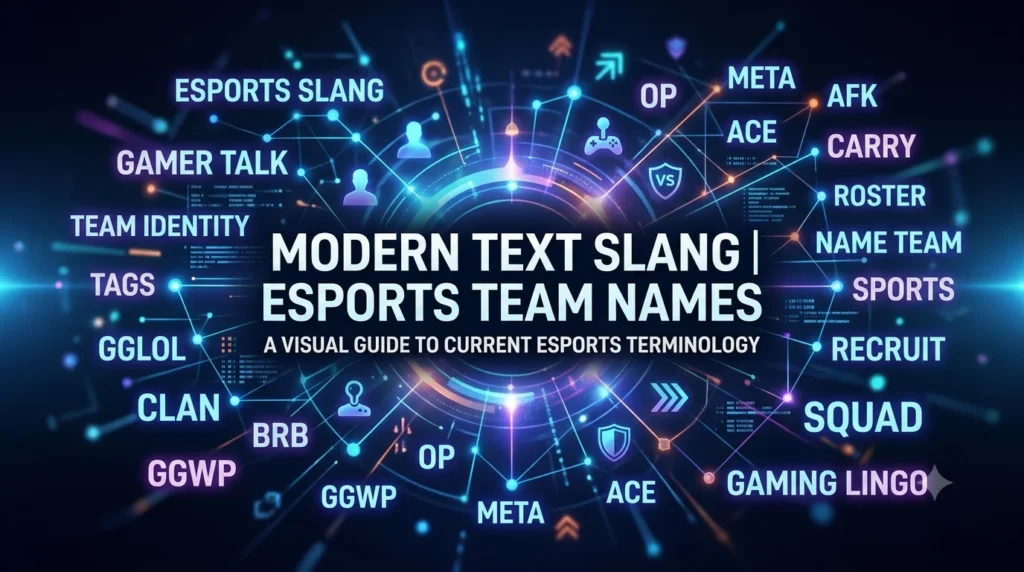
At its core, a name team esport choice is the official, branded identifier utilized by a group of competitive gamers. It serves as their collective alias across global tournament circuits, streaming platforms, and merchandise lines.
- It acts as a corporate identity within the digital entertainment ecosystem.
- The structure typically pairs a distinct noun or abstract concept with an optional operational modifier like “Gaming,” “Esport,” or “Clan.”
- It functions as a unifying anchor for player alignment and fan loyalty.
“We weren’t just a group of friends anymore once we put ‘Natus Vincere’ next to our handles. We became a mission statement.”
“When you hear ‘FaZe Clan,’ you don’t just think of headshots; you think of a specific lifestyle, a look, and an attitude.”
Origin & Background
From Arcade High Scores to Corporate Franchises
The phenomenon did not emerge overnight in a boardroom. It began in the smoky, neon-lit arcades of the late 1970s and 1980s, where players were limited to mere three-letter inputs to claim bragging rights on Space Invaders or Pac-Man cabinets.
As the internet matured in the late 1990s, local area network (LAN) parties birthed the concept of the “clan tag.” Players began placing brackets around prefixes like [4W] or [3D] to signal their brotherhood in early shooters.
The Shift to Professional Branding
When streaming platforms turned casual play into a multi-billion-dollar spectator industry, those informal tags had to grow up. The cultural influence shifted from underground counter-culture to prime-time entertainment.
Social media networks accelerated this transformation rapidly. Today, a team title must look pristine as an Instagram icon, translate smoothly into a TikTok hashtag, and remain clean enough for Fortune 500 sponsorship deals.
Real-Life Conversations
Scenario 1: The WhatsApp Strategy Session
Alex: Yo, we need to register for the open qualifiers by midnight tonight. What are we putting down for our name team esport tag?
Jordan: Idk, something basic like ‘Team Apex Hunters’?
Alex: Nah, that sounds like a default clan from 2012. We need something punchy that actually sounds clean on a jersey. Let’s go with ‘Vortex Esports’.
Scenario 2: The TikTok Comment Debate
User1: Man, the roster for Neon Vanguard looks absolutely stacked this season!
User2: For real, but honestly, their branding is what made me buy the hoodie. That name goes so hard.
User1: Facts. A good name makes you feel like you’re pulling for a real sports franchise, not just some random streamers.
Scenario 3: An Instagram DM Pitch
Manager: Hey Tyler, love your clips. Our organization, ‘Aether Gaming’, is looking for a new anchor player. Are you signed?
Tyler: Hey! Thanks man. I’ve actually seen your team name on the leaderboards lately. Love the vibe you guys are building. Let’s talk details.
Emotional & Psychological Meaning
The Power of Collective Pride
Choosing an identity triggers an incredible psychological shift within a roster. It marks the precise moment a loose group of friends transitions into a disciplined, goal-oriented unit.
Psychologists note that collective nouns foster a sense of shared responsibility and elevated accountability. When you wear a respected emblem, your individual ego takes a back seat to the preservation of the brand’s reputation.
A Personal Revelation from the Field
Years ago, during an amateur tournament, our squad competed under a generic joke name. We played sloppily and laughed off our mistakes. The following season, we rebranded to an elegant, serious title with a custom logo. The atmosphere changed instantly; we practiced harder, communicated with precision, and treated each match like an executive presentation because our new identity demanded respect.
Usage in Different Contexts
The Social Media Ecosystem
On platforms like X and Instagram, your squad’s handle serves as a digital storefront. It requires a clean aesthetic, a memorable acronym, and a structure that lends itself to viral fan art.
Inner Circles and Relationships
Among your inner circle, the name is a badge of honor and shared history. It represents the sleepless nights, the heartbreaking losses, and the triumphant comebacks that built your bond.
The Professional Boardroom
When pitching to corporate sponsors or tournament organizers, the tone must pivot immediately. The title needs to evoke sustainability, marketability, and a complete absence of controversial or offensive connotations.
When NOT to Use It
Avoiding the Pitfalls of Tone-Deaf Branding
There are critical boundaries where an edgy name crosses line into PR disaster. You must absolutely avoid terms that borrow heavily from sensitive cultural ceremonies, religious iconography, or historical tragedies.
Furthermore, using highly aggressive or violent language might feel authentic to an underground shooter community, but it will instantly disqualify your roster from mainstream broadcast opportunities and school-sanctioned leagues.
Common Misunderstandings
Myth vs. Reality in Esports Branding
Many amateur captains believe that a complex, multi-word title sounds grander and more intimidating. The reality is quite the opposite; the most iconic brands in the industry are remarkably simple.
| Aspect | What Amateurs Think | What Professionals Know |
| Complexity | More words sound epic and deep. | Single words or short compounds stick in the mind. |
| Edge Factor | Intimidating or dark words scare enemies. | Clean, inspiring words attract premium sponsors. |
| Acronyms | The tag doesn’t matter as long as the full name is cool. | The short tag is what commentators will say 90% of the time. |
Key Insight
Longevity in this space relies entirely on adaptability. A brilliant team name leaves room for growth, allowing a roster to expand from a single shooter game into fighting games, racing simulators, or lifestyle apparel without losing its core identity.
Variations & Types of Esport Team Names
The Mythological Construct
- Meaning: Utilizing ancient deities or legends.
- Example: Names like ‘Titan Gaming’ evoke immediate power, history, and scale.
The Abstract Single-Noun
- Meaning: A clean, evocative word that sets an atmospheric tone.
- Example: ‘Cloud9’ or ‘Fnatic’ focus on feeling and uniqueness rather than literal descriptions.
The Action-Oriented Compound
- Meaning: Combining a vivid verb with a tactical noun.
- Example: ‘Team Liquid’ suggests fluidity, adaptability, and unstoppable momentum.
The Localized Franchise
- Meaning: Grounding the digital roster in a physical geographic location.
- Example: ‘London Spitfire’ builds immediate regional loyalty and traditional sports appeal.
The Dark Aesthetic
- Meaning: Embracing shadows, mystery, and underground culture.
- Example: ‘Team Secret’ creates a sense of exclusivity and hidden tactical depth.
The Futuristic Concept
- Meaning: Leaning heavily into sci-fi, cybernetics, and tech aesthetics.
- Example: ‘Cyber Sentinels’ appeals directly to the digital nature of the medium.
The Minimalist Acronym
- Meaning: Using stylized letters that sound pleasant phonetically.
- Example: ‘TSM’ or ‘100T’ simplify massive concepts into brief, punchy audio bytes.
The Nature Element
- Meaning: Drawing raw inspiration from weather systems and natural forces.
- Example: ‘Team Vitality’ or ‘Blizzard’ suggests an organic, undeniable power.
How to Respond When Someone Uses It
Dealing with Identity Feedback
When you debut your brand to the community, you will receive a wide spectrum of reactions from rival squads, fans, and tournament officials.
- The Casual Reply: “Thanks for checking out the launch! We spent weeks tweaking the concept.”
- The Funny Reply: “Glad you like it! Hopefully, our gameplay lives up to how expensive the logo design looked.”
- The Mature Reply: “We wanted an identity that honors our history while remaining professional for future sponsors.”
- The Respectful Reply: “Appreciate the support from your camp. Looking forward to matching up against you guys in the brackets.”
Regional & Cultural Usage
Navigating Global Sensibilities
In Western competitive spheres, branding often mirrors extreme sports or streetwear fashion, focusing heavily on individualistic, bold statements and minimalist design.
Conversely, Eastern Asian structures frequently incorporate traditional philosophies, corporate ownership roots, or deeply poetic concepts that emphasize harmony, discipline, and collective honor.
The Generational Divide
Millennial gamers often view these names through a purely functional, nostalgic lens, preferring classic clan structures. Gen Z and Alpha, however, treat them as expansive multi-media projects where lifestyle curation matters just as much as win-loss ratios.
Is It Safe for Kids?
Keeping the Community Accessible
Creating a clean, accessible name team esport concept is completely safe and highly recommended for younger players. It teaches foundational lessons regarding collaborative marketing, digital design, and teamwork.
Parents should simply ensure that youth rosters avoid mature themes, explicit language, or aggressive political overtones during their brainstorming sessions to keep the environment fun and educational.
FAQs
What makes a team name memorable?
Simplicity, easy pronunciation, and a strong visual silhouette are the pillars of a great moniker.
Should we include our city name in the title?
Only if you plan to focus heavily on local community events or participate in franchised leagues that require geographic ties.
Can a team change its name later?
Yes, rebranding is common, but doing it too frequently can alienate your existing fan base and hurt your historical data tracking.
How long should an esport team tag be?
Keep the in-game tag between two to four characters for clean readability on tournament scoreboards.
Is it legal to use a name that exists in another sport?
Avoid copying existing trademarks directly to protect your roster from future legal complications and copyright strikes.
Conclusion
Carving out your space in the digital arena is a beautiful journey of self-discovery and collective ambition. A truly great name team esport foundation bridges the gap between casual play and professional greatness. Wear your chosen title with pride, respect your rivals, and let your legacy be written in the server.